Where it started.
Where it's going.
-
2022 · Queens
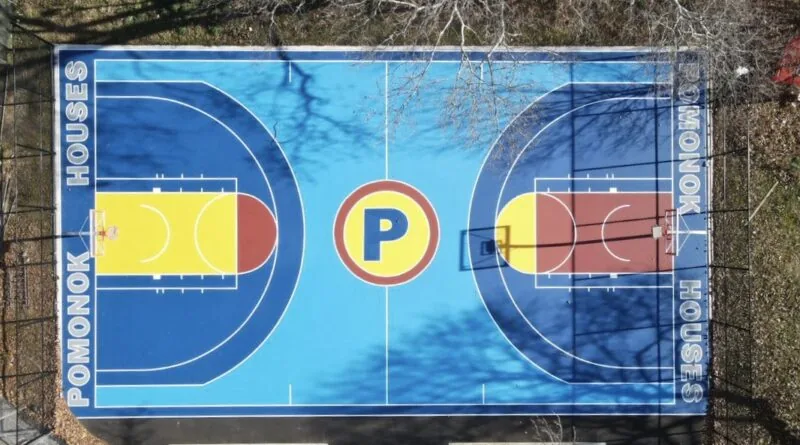
Pomonok Houses
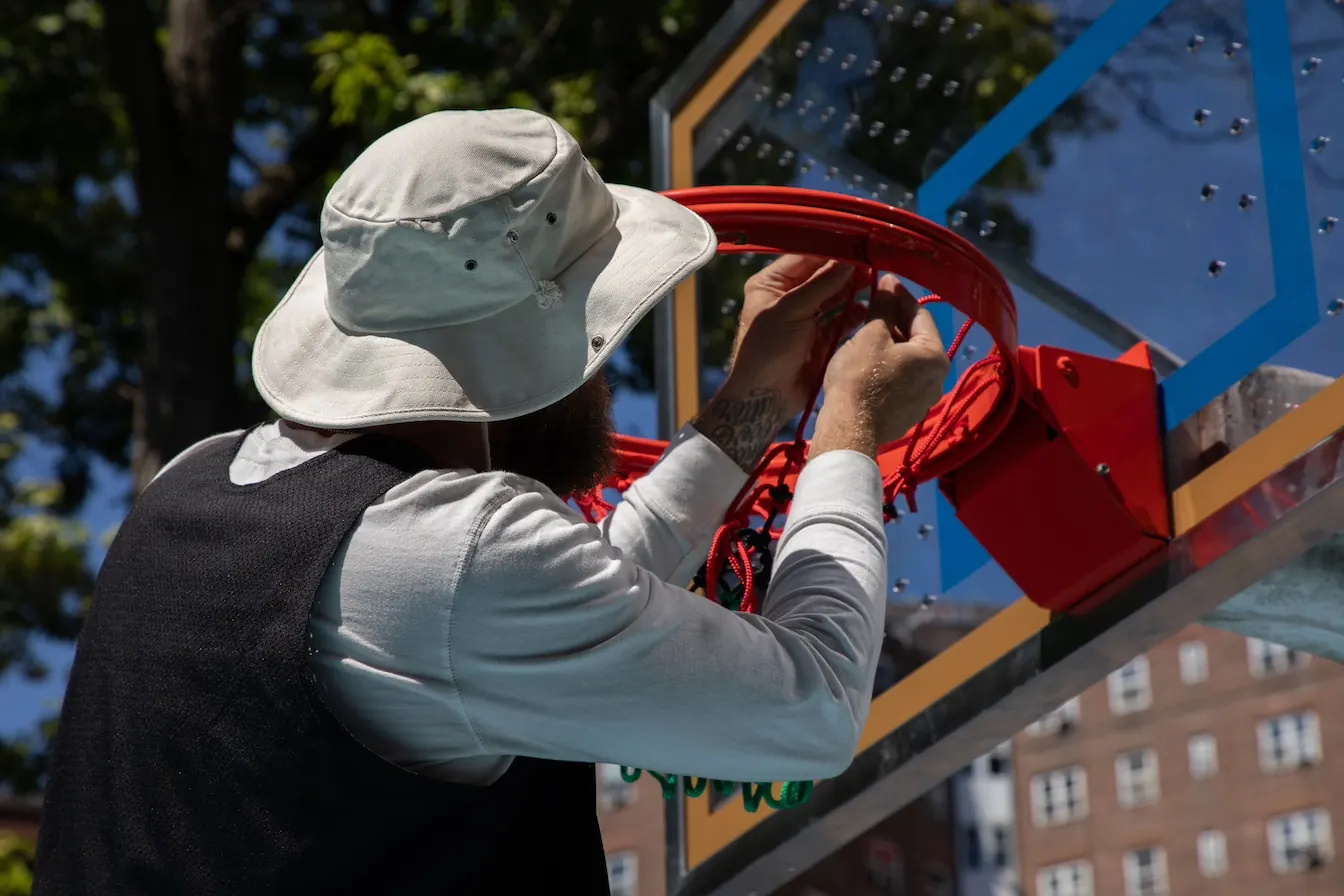
The first court. More than 200 Pomonok residents took part in surveys, workshops and community events to decide what their open space should become — and they picked the basketball court. It opened with new surfacing, paint, hoops and nets, and it set the model for everything since.
-
2023 · Hell's Kitchen, Manhattan
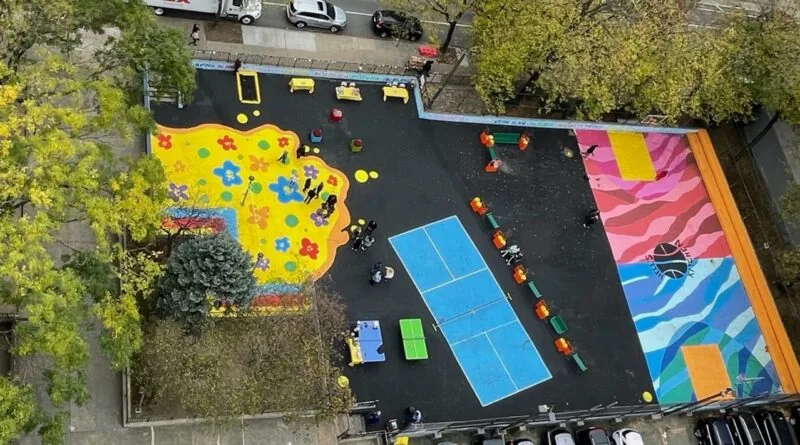
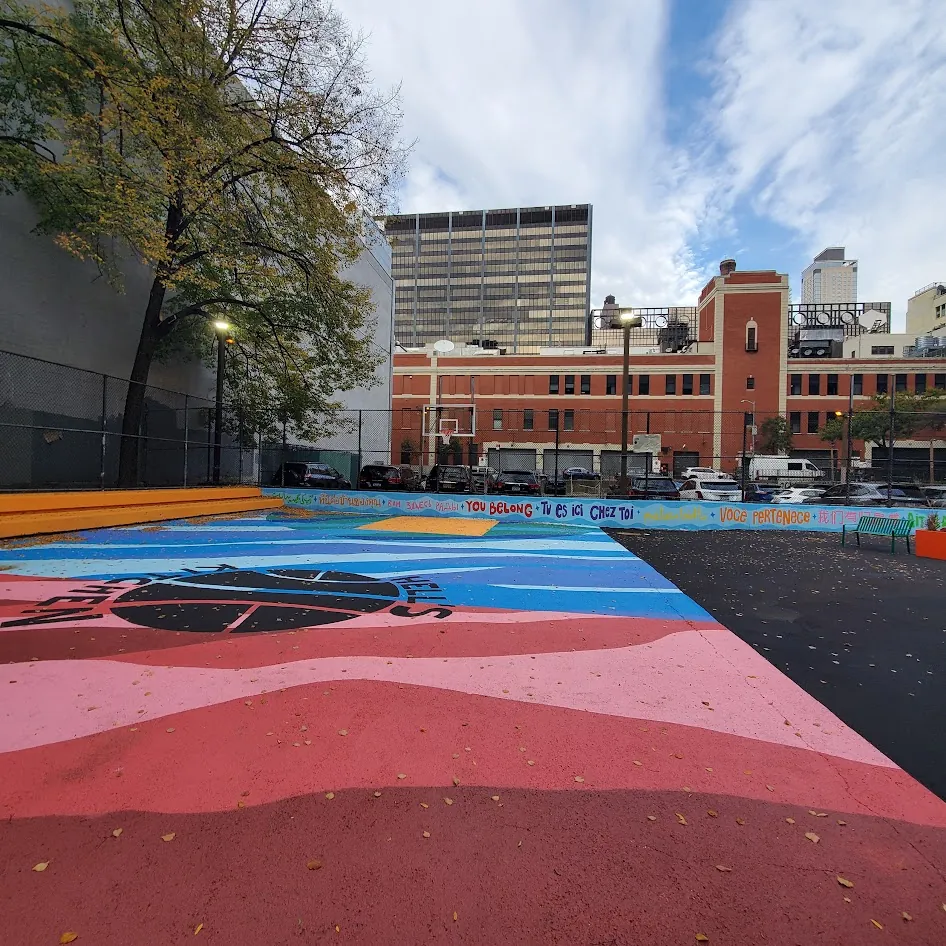
Harborview Terrace
Twenty thousand square feet of underused asphalt became a court, a pickleball court, a ping pong table, new seating and more than twenty planter boxes. Residents and over a hundred volunteers did the work. Along the walls, You Belong is painted in more than twenty languages, including Braille.
-
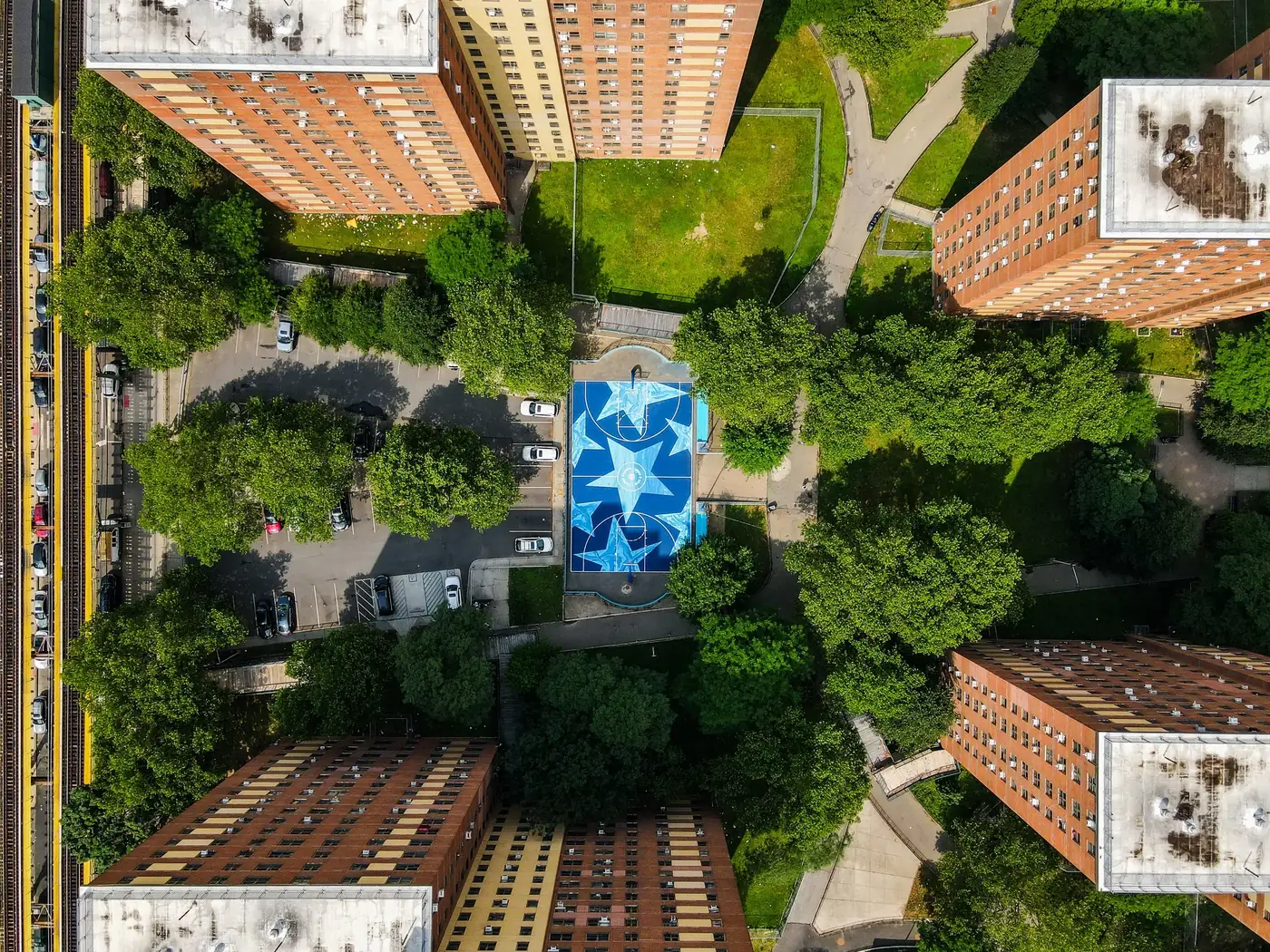
2026 · Brownsville, Brooklyn
The Seven Stars Court
Hoopbus worked with Tilden Houses residents, the Office of Neighborhood Safety and the Neighborhood Safety Initiatives team to refurbish its first court in Brooklyn. The seven stars belong to Brownsville. The court is part of NeighborhoodStat, under the Mayor's Action Plan for Neighborhood Safety, which has worked to strengthen wellbeing in NYCHA developments since 2018.
What waiting looks like
Two hundred and fifty more.
These are the courts at Roosevelt Houses in Brooklyn, photographed this year. Cracked slabs, patched seams, lines worn down to a suggestion, one backboard still up and holding. Kids play here anyway. This is the condition most NYCHA courts are in, and it is the whole reason the campaign exists.
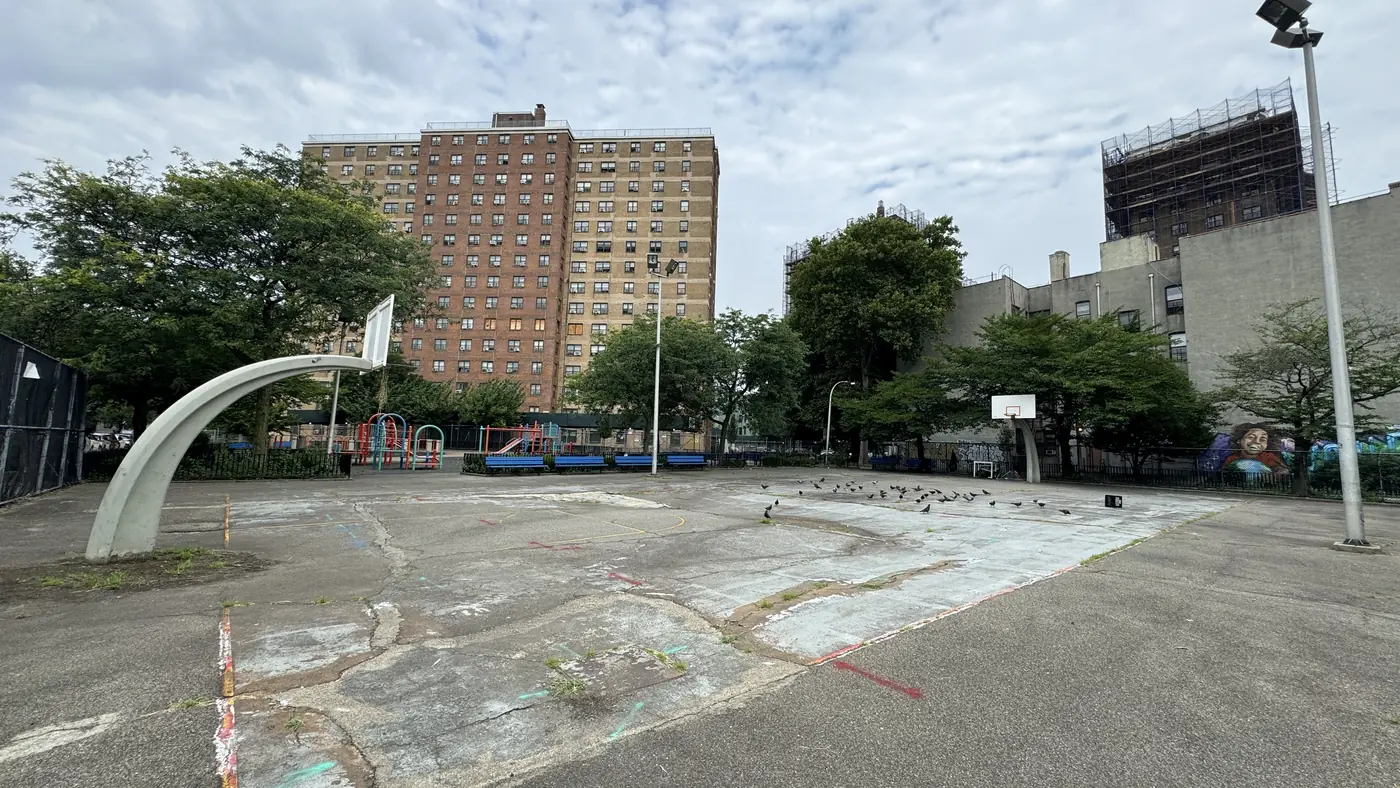
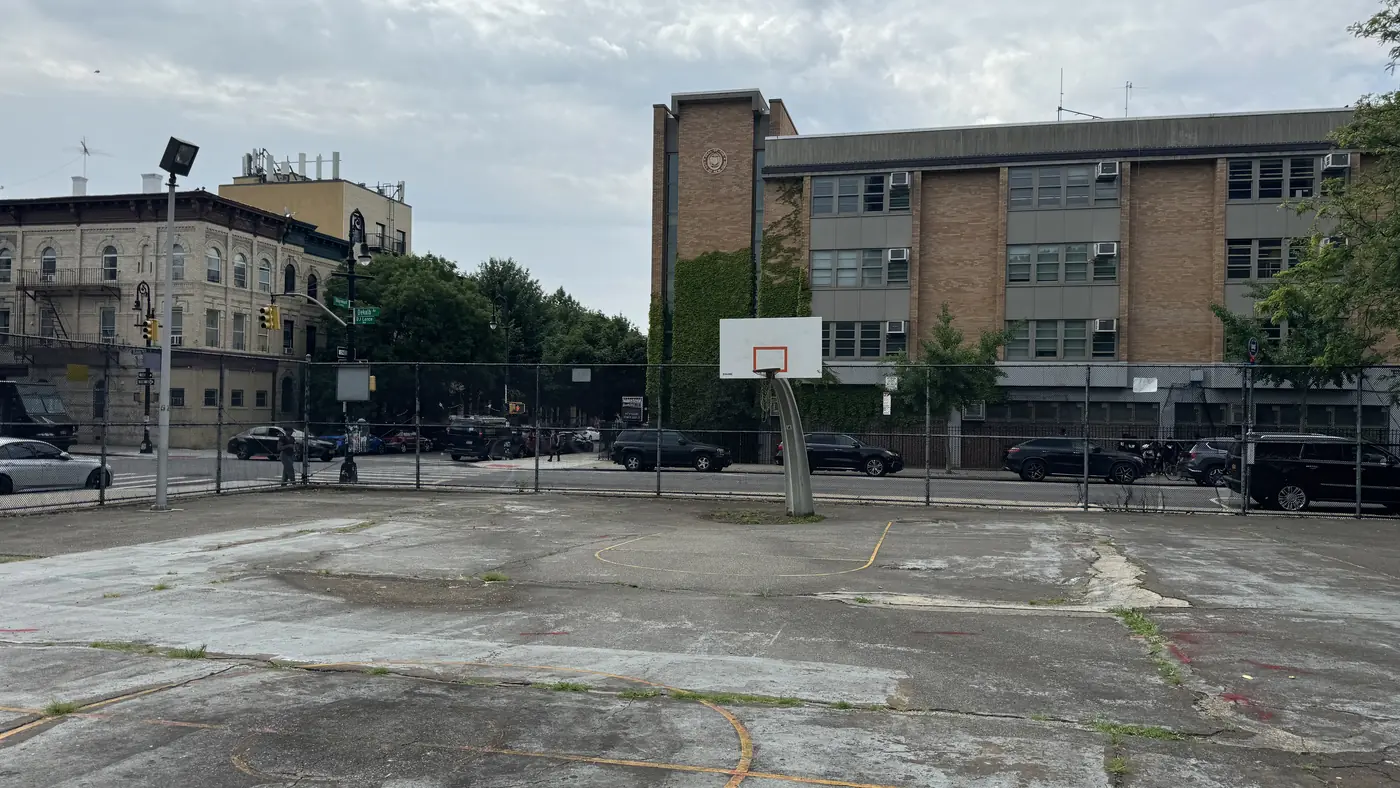
A court in this condition is not a lost cause. It is a line item.
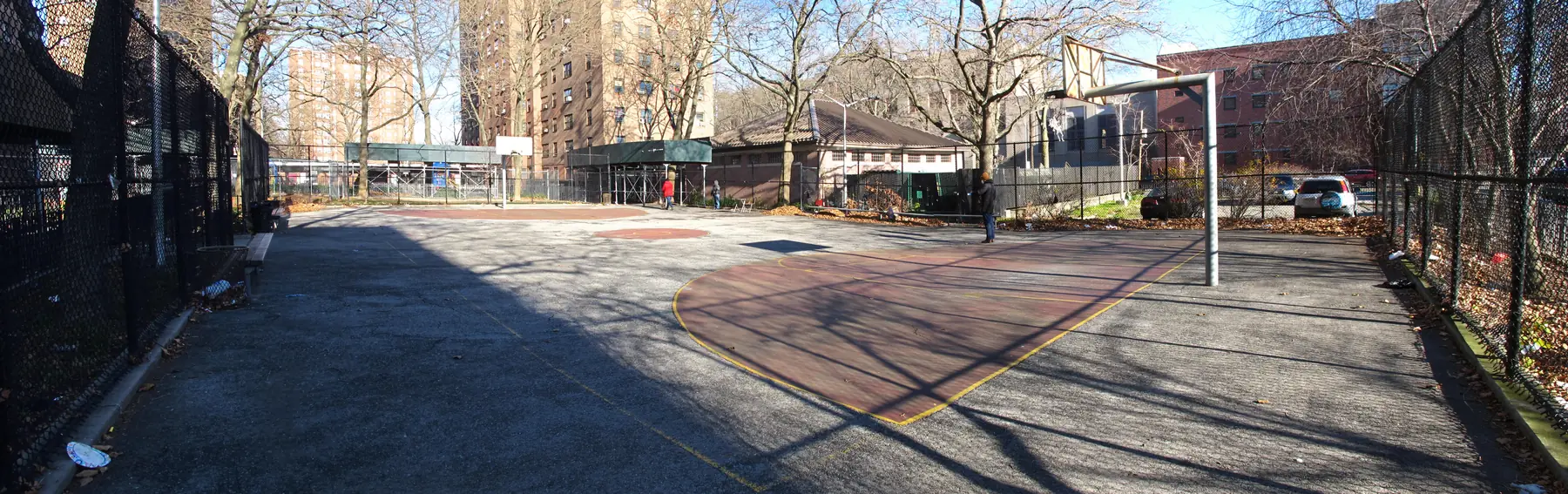
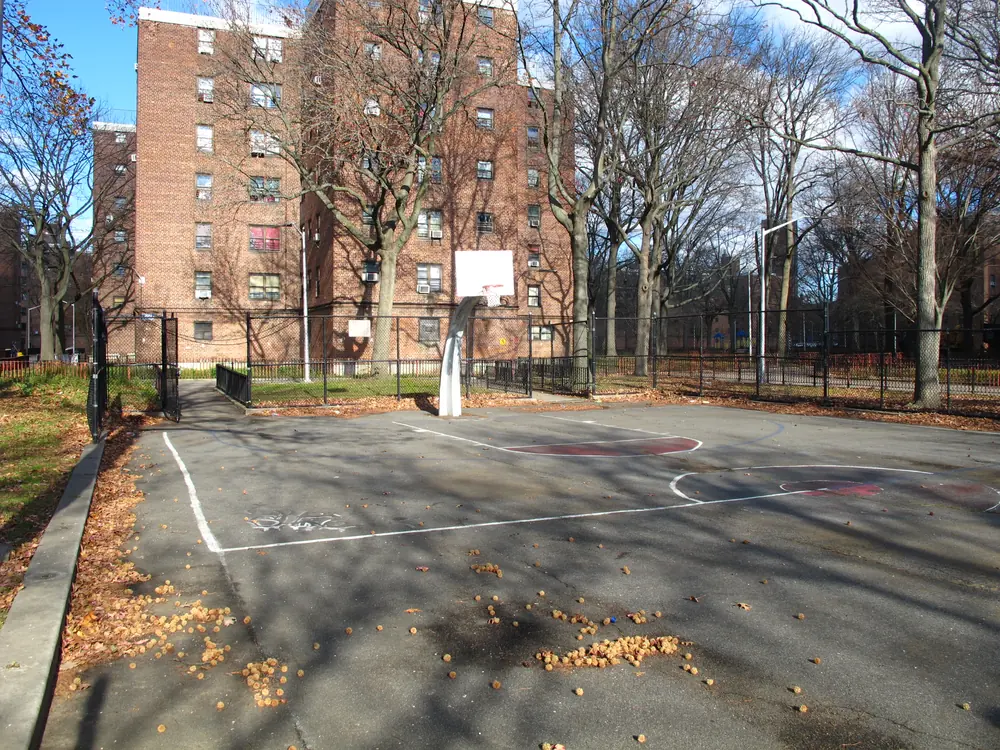
Both of these courts looked like Roosevelt does now. Both have since been restored. That is the whole argument: the difference between these photographs and a playable court is money and a decision, and most courts land somewhere around $100,000.
A team sport.
Every court on this page took a roster. Residents decide what gets built; from there it takes designers, painters, contractors, city agencies, funders and the people who show up to run the games afterwards. Some of these names worked on the courts above. Others have been quietly rebuilding NYCHA courts for years.
Residents, first
- The resident associations at Pomonok, Patterson, Harborview Terrace and Tilden Houses
- The 200-plus Pomonok residents who chose a court over everything else on the list
- The 100-plus volunteers who rebuilt Harborview Terrace by hand
Design and build
- Hoopbus
- Project Backboard, whose open-source refurbishment manuals are what Hoopbus points new builders to
- NYCHA's Capital Projects Division
- Hester Street
- Design Trust for Public Space
- genEquality and its Nudge Art program
- Artolution
- Kompan
Safety and the neighborhood
- The Mayor's Action Plan for Neighborhood Safety and NeighborhoodStat
- The Office of Neighborhood Safety and the Neighborhood Safety Initiatives team
- Center for Justice Innovation
- The NYPD and the Manhattan District Attorney's office, whose asset-forfeiture funding rebuilt fifteen NYCHA courts
- The Mayor's Office of Criminal Justice
Play, after the ribbon
- Madison Square Garden Sports and the Jr. Knicks
- House of Mandela, who brought the league idea to NYCHA
- NYC Parks
The money
- The Leona M. and Harry B. Helmsley Charitable Trust, behind PHCF's Green Space Connections program
- The Pershing Square Foundation, at Harborview Terrace
- The Mellon Foundation, for the artists
- Council members who have put district money into their own courts
- The Coney and the Isaiah Whitehead Foundation, at Surfside Gardens in Coney Island
- Under Armour, the NBA and Kemba Walker, who came back and rebuilt his home court at Sack Wern in 2013
This list is not finished, and neither is the work. If your organization has restored a NYCHA court, or wants to, tell us and we'll add you to the roster.